English · Español · Français · 简体中文
How to Check Crystal Cat Litter for Quartz or Glass
By PREMIER Cat Litter
A bag of crystal litter can look perfectly ordinary until liquid starts pooling at the bottom of the tray. Pooling alone does not prove adulteration. But if the same bag contains a group of unusually clear, opaque or hard grains, it is worth taking a closer look.
Crystal cat litter is made with porous silica gel. Its pores take up liquid. Ordinary glass and dense quartz can look similar, but they do not have the same pore structure or liquid uptake. Replacing some silica gel with cheaper grains can cut material costs and reduce the amount of usable litter. Sharp fragments can also cut a cat’s paws.
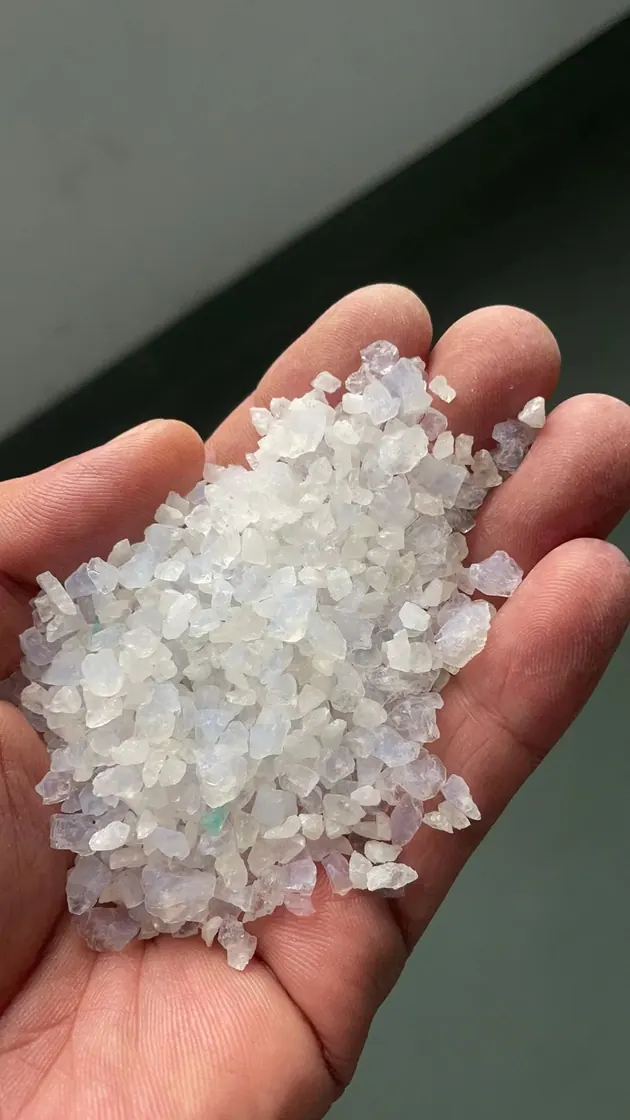
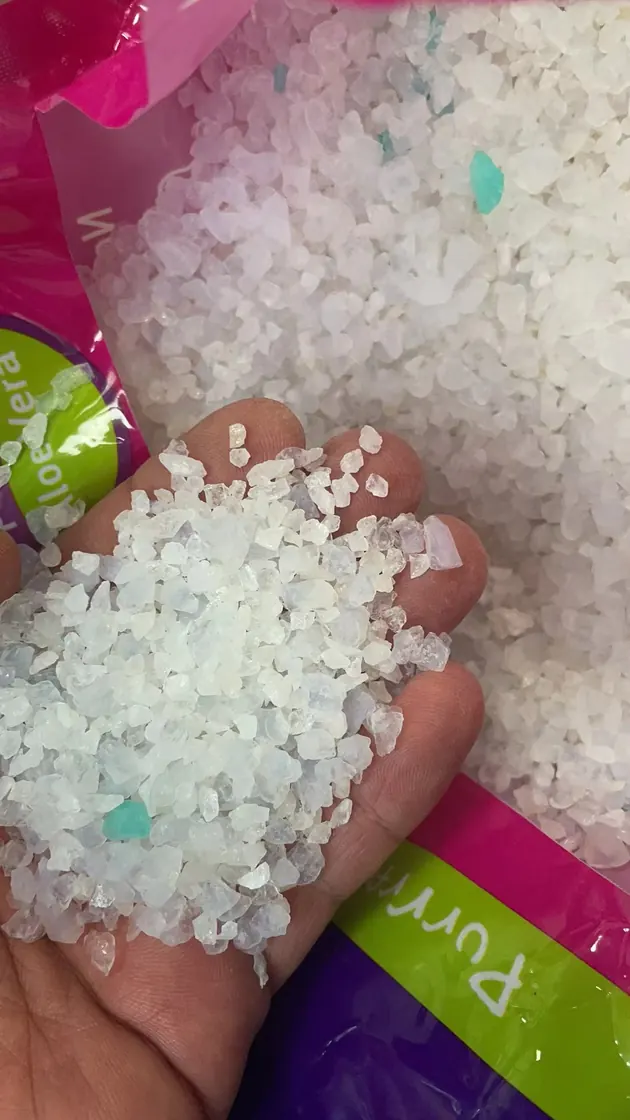
These are sample photos supplied to PREMIER. The photos cannot establish material identity or the proportion of any filler.
Look for a group of grains that stands out
Spread a little unused litter on white paper. Uncolored silica gel often looks translucent or frosted. A group of especially clear grains with sharp edges warrants a check for glass-like fragments. Unusually white, opaque or yellowish grains are worth comparing with an unused sample of the same grade. Color on its own does not identify quartz, glass or any other material.
Compare crush strength only under the same conditions
Some silica gel grains fracture readily under pressure. For batch checks, compare grains of similar size under the same test conditions. If part of the new batch is consistently harder to crush than the approved sample, set it aside for retesting. Silica gel grades differ in strength. Do not pinch or crush a suspected shard.
Compare net weight and volume together
Some 3.8 L packs weigh around 1.4–1.6 kg net, but this is not a universal specification. Let dry litter from both samples fall into the same measuring container without shaking or packing it, then compare net weight at the same volume. A noticeably heavier sample warrants a closer look. Particle size and shape affect the result. If a pack holds less than its stated volume, check the fill separately.
Check how much liquid remains
If there are no suspected sharp fragments, put equal weights of unused test and reference litter in identical cups, add equal amounts of water and wait the same length of time. Consistently more water left in one cup points to a performance difference. It does not identify the material.
What to do if you suspect adulteration
Stop using litter that appears to contain glass or other sharp fragments. Keep the bag, batch number and photos, and contact the seller. For a bulk order, isolate the lot and send a representative sample to an independent laboratory. A figure such as 30–50% needs a confirmed composition and a stated measurement basis. A result for one sample does not describe the whole market.
Explore PREMIER crystal cat litter · Request wholesale or private-label samples