PREMIER / CAT METABOLIC HEALTH
Glucose in cat urine: causes, consequences and the role of monitoring granules
Drinking more, producing larger amounts of urine or losing weight despite a good appetite are changes worth investigating. Glucose in urine—also called glucosuria—can be a clue, but it does not by itself establish a diagnosis of diabetes.
PREMIER urine glucose indicator granules are intended to provide a visible color signal during everyday litter care. Their role is to support observation and prompt veterinary assessment, not replace blood glucose testing or diagnose a disease.
Why does glucose appear in a cat's urine?
The kidneys normally reabsorb most filtered glucose. Glucose can increase in urine when blood glucose exceeds the kidneys' reabsorption capacity or when the renal tubules cannot reabsorb glucose properly.
1. Diabetes and persistent high blood glucose
Diabetes develops when insulin action or insulin production is inadequate. Glucose remains elevated in the bloodstream and can pass into urine. Obesity, increasing age, inactivity, some diseases and certain medicines are relevant risk factors; feline diabetes is not simply a consequence of eating sugar.
2. Severe stress and temporary changes
Stress, a veterinary visit or illness can temporarily increase blood glucose in cats. Severe stress hyperglycemia can sometimes cause glucosuria. A single abnormal urine result therefore cannot confirm diabetes.
3. Renal tubular problems
Glucose can appear in urine despite normal blood glucose when the renal tubules do not reabsorb it normally. This needs further investigation rather than an automatic diabetes diagnosis.
4. Medication effects
Corticosteroids and other medicines may contribute to insulin resistance. Some prescribed diabetes treatments intentionally increase glucose excretion in urine. Tell your veterinarian which medicines your cat receives; never stop or change treatment based only on a urine color result.
These distinctions are discussed in the AAHA diabetes guidance, Merck Veterinary Manual and iCatCare consensus guidelines.
What can uncontrolled diabetes cause?
- More urination, thirst and dehydration: glucose in urine draws additional water out of the body.
- Weight and muscle loss: the body cannot use glucose effectively and breaks down other energy reserves.
- Hind-limb weakness and an unusual stance: persistent high blood glucose can damage peripheral nerves.
- Diabetic ketoacidosis: severe insulin deficiency can lead to ketone accumulation, acidosis, dehydration and electrolyte disturbances. This is a medical emergency.
See AAHA's overview and ketoacidosis guidance.
What are PREMIER urine glucose granules used for?
Glucose indicator photo examples / 尿糖颗粒反应对照
For the standalone glucose indicator only. These existing PREMIER product photographs illustrate original and reacted states; they are not patient test results.
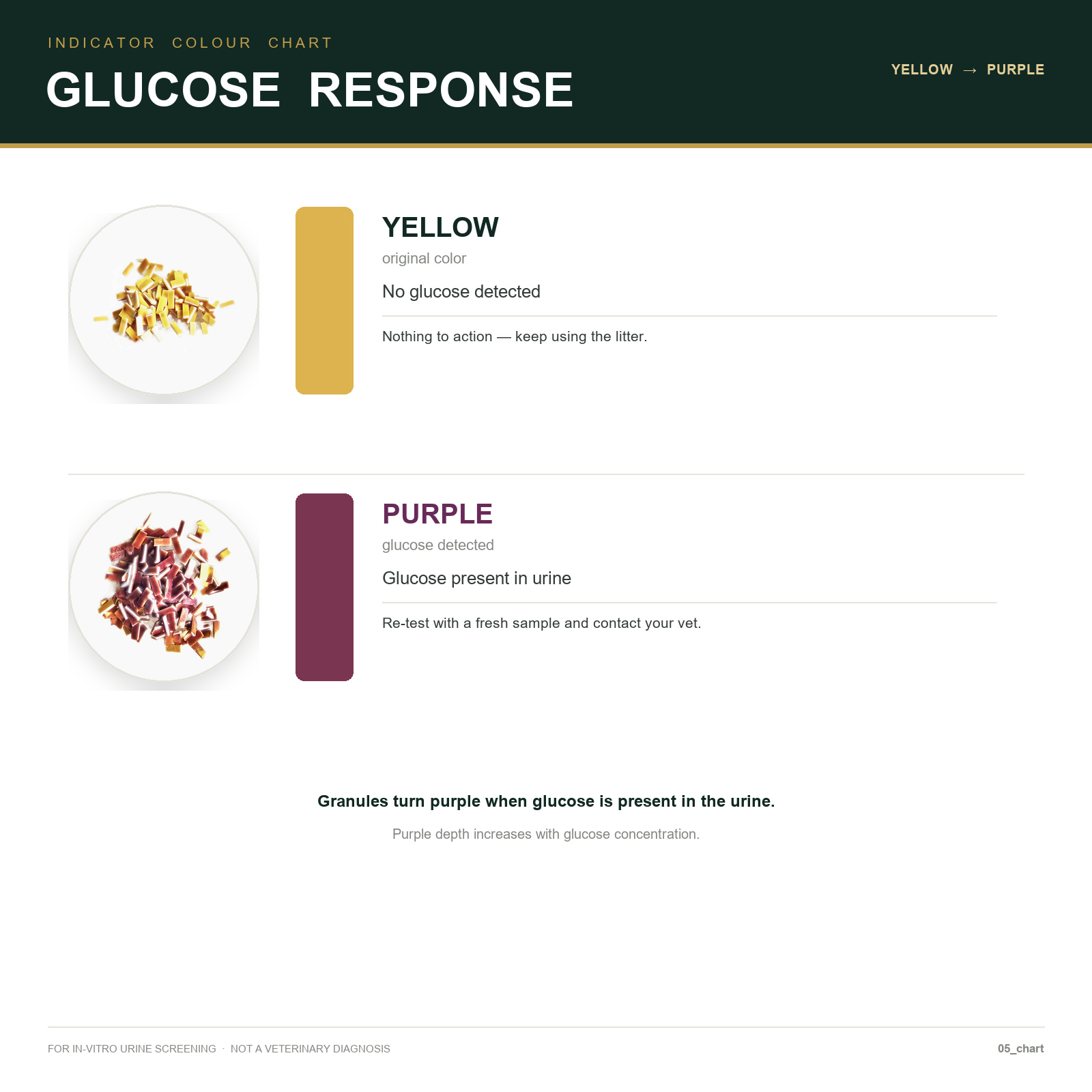 黄色:原始 / 未显色YELLOW · ORIGINAL / NO VISIBLE REACTION未显色不能排除尿糖异常或糖尿病紫色:尿糖反应提示PURPLE · GLUCOSE-RELATED REACTION异常提示,请联系兽医;不等于确诊糖尿病
仅适用于单一尿糖指示颗粒。图片为产品反应示例;黄色不代表健康正常,紫色不能确诊糖尿病。混合隐血与尿糖颗粒需按独立说明判读,不能将紫色单独解释为尿糖阳性。
Urine volume is visible during cleaning; glucose usually is not. Indicator granules are designed to turn an appropriate chemical response into a color cue, adding another observation to routine litter care. The final product's validated instructions must define sensitivity, detection range, reading time and interference limitations.
A prompt to notice changes
An unexpected result can remind an owner to review water intake, urine output, appetite and body weight and contact a veterinarian. It is a reason to investigate, not a disease label.
A record to share at a consultation
Photograph the reaction and record the date, symptoms and medication history. These observations can supplement the veterinarian's assessment but do not replace a laboratory urinalysis or blood tests.
Additional observation under veterinary guidance
For cats with diagnosed diabetes, follow the monitoring plan set by the veterinarian. Urine glucose granules cannot identify hypoglycemia or determine an insulin dose. Do not inject, increase or reduce insulin based on a litter color.
How to use and interpret the result responsibly
- Identify the exact product. A standalone glucose indicator and a mixed indicator blend may have different reaction rules.
- Follow its instructions. Use the specified amount, reading window, lighting and product-specific color chart.
- Record and seek advice. Save a photograph and note changes in drinking, urination, appetite and weight. Do not postpone care to repeat the test.
- Keep symptoms in view. An unchanged color does not exclude early diabetes, glucose below the detection range or another disease.
From a home signal to a proper diagnosis
A veterinarian evaluates symptoms alongside sustained blood glucose results and formal urine testing. Fructosamine measurement or home blood glucose monitoring may help distinguish ongoing diabetes from a temporary stress response. An early abnormality can require follow-up even when one test is inconclusive.
AAHA: Recognizing diabetes in cats · Cornell University: Feline diabetes
Explore the monitoring range
Compare PREMIER glucose indicator granules, or read our pH and occult blood observation guide. For private-label projects, confirm the formulation and performance documentation before approving claims or packaging.
General educational information, not an individual diagnosis. PREMIER urine glucose granules support observation; they do not diagnose, treat or rule out diabetes, detect or exclude ketoacidosis, or replace veterinarian-directed blood glucose and ketone monitoring.