PRODUCT SCIENCE · 2026-10-10
How Crystal Cat Litter Controls Odor: A Buyer Guide
By PREMIER CAT LITTER INDUSTRIES LIMITED
Understand crystal cat litter odor control, silica gel moisture uptake and sample testing. Separate material science from product-specific performance claims.
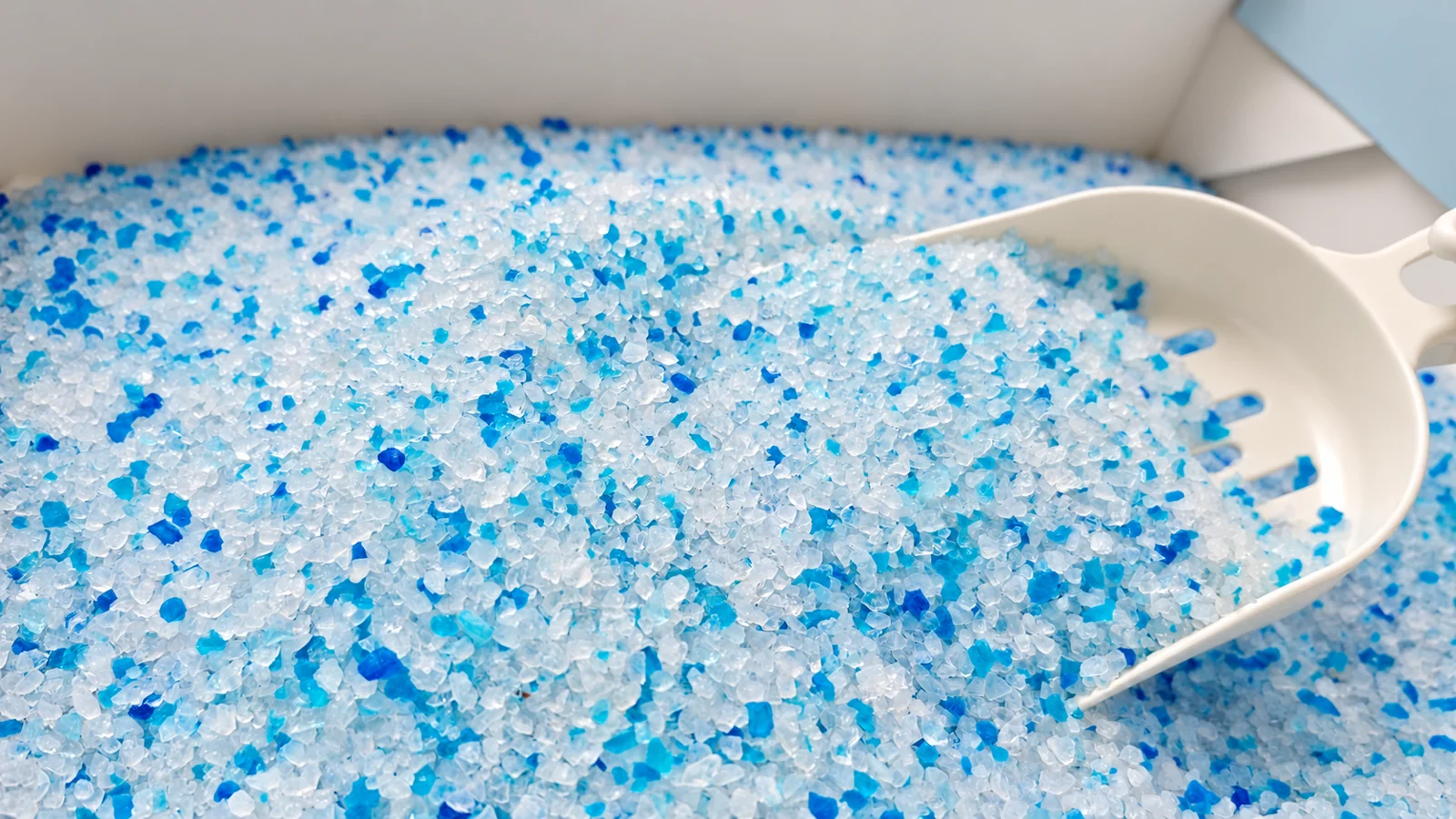
Crystal cat litter helps manage litter-box odor by taking up moisture into porous silica gel. Moisture uptake and complete odor removal are different measurements, so buyers should evaluate them separately. Silica gel gives crystal litter a practical way to manage moisture. The final odor result depends on the formulation, the amount of litter and its maintenance.
The important structure is inside the granule
Silica gel contains pores that provide internal surfaces where water can be adsorbed. In everyday product language this is often called absorption; adsorption refers more specifically to molecules being held at a surface.
Chua and colleagues measured water-vapor adsorption on two silica gels and characterized pore size, pore volume and surface area. This supports the material basis for moisture uptake. Their study used water vapor under controlled conditions, not cat urine in a litter box, so its results are not a numerical urine-absorption claim for a finished litter. [1]
Why moisture management matters
In practical use, moisture uptake can help limit exposed liquid and distribute the urine load through the litter. This is a reasonable explanation for part of crystal litter's odor-management role, rather than a direct finding from the water-vapor study. It does not mean bacteria are killed, urine is sterilized or every odor molecule is permanently trapped.
A repeatedly wetted area can become the weak point of a tray even while other crystals remain relatively unused. Stirring a non-clumping product, when its instructions call for it, helps make better use of the litter already in the box. Clumping crystal litter needs a different routine: remove clumps and replenish according to its instructions.
Cat odor is more complicated than ammonia
Robins and colleagues investigated felinine-derived sulfur malodor and commercial litter materials. Their findings show why an ammonia-only evaluation can miss part of the odor problem. They also examined urease activity, which is involved in ammonia generation. Results differed between materials; deodorizing claims or fragrance did not universally solve the sulfur odor studied. [2]
For a buyer, the implication is straightforward: ask what an odor claim measures. An ammonia measurement, a smell-panel rating and a moisture-uptake result answer different questions. None should quietly stand in for the others.
Fragrance is a separate decision
A requested scent can change the smell people perceive, but it does not establish that underlying odor compounds have been removed. Start with an unscented sample to compare the base litter, then evaluate the scented version separately. Color is also a customization choice, not evidence of stronger adsorption or better odor performance.
Capacity and maintenance still matter
Crystal litter has a finite working capacity. Fragrance does not make a repeatedly wetted area fresh again. Remove feces promptly, follow the maintenance directions for the particular format and replace litter when its condition or instructions require it. A replacement interval should reflect actual use rather than a single promise for every household.
How buyers can evaluate a sample
Compare samples using the same litter quantity, tray geometry, liquid loading, temperature and observation times. Record moisture behavior and odor separately. Include an unused control, repeat the comparison and describe the method alongside the result. If a liquid substitute is used, identify it clearly; that comparison is not identical to a household trial with cats.
Request the granule specification, maintenance directions and any available odor-test report before approving packaging claims. Do not print a percentage reduction or fixed odor-free duration without evidence for that exact formulation and test method.
What this means for PREMIER crystal litter
PREMIER offers crystal cat litter with color and fragrance customization for B2B product briefs. Discuss the intended granule format, packaging and maintenance directions when requesting samples. The cited research explains material properties and odor chemistry; it does not certify PREMIER products or establish a product-specific odor-reduction percentage.
Good odor management starts with the material, but the formulation, instructions and everyday maintenance complete the job.
Frequently asked questions about crystal litter odor control
Does crystal cat litter remove every odor? No. Water uptake, ammonia behaviour and sulfur-related malodor are different questions. Ask what the test actually measured and avoid treating one result as proof of complete odor elimination.
Does fragrance prove better odor control? No. Fragrance changes perceived scent, but does not by itself demonstrate removal of odor compounds. Compare an unscented base sample and evaluate the proposed scented formulation separately.
What should a private label buyer request? Ask for the actual granule specification, maintenance instructions, identified samples and any product-specific odor report. Agree the test conditions and packaging wording before approving a claim.
Research references
- Chua et al. (2002), Adsorption characteristics of silica gel + water systems, DOI 10.1021/je0255067
- Robins et al., Control of felinine-derived malodor in cat litter, DOI 10.1177/1098612X211009136 (online 2021; issue 2022)
Explore crystal cat litter specifications · Request samples for evaluation
Prepared with AI assistance and checked against the research sources linked above. The cited studies are not tests of PREMIER products.